Non-Invasive AI Decodes Brain Waves into Speech, Matching Surgical Accuracy
Brain2Qwerty v2 represents a significant leap in the field of non-invasive brain-computer interfaces (BCIs), offering a promising new pathway for communication restoration without the need for surgical implants. The system utilizes advanced deep learning techniques to decode complex brain activity directly into coherent text, achieving performance metrics that challenge the historical dominance of invasive neuroprosthetics.
The core innovation lies in moving beyond traditional, hand-crafted signal processing pipelines. Instead, the researchers employed an end-to-end deep learning architecture trained directly on raw, noisy brain signals. This approach allows the system to leverage the rich semantic context inherent in language, effectively bridging the gap between the highly complex, often noisy electrical patterns recorded from the brain and the structured, meaningful output of human language. This is particularly crucial for individuals suffering from brain lesions or conditions that severely impair their ability to communicate, representing a potential paradigm shift in neurorehabilitation.
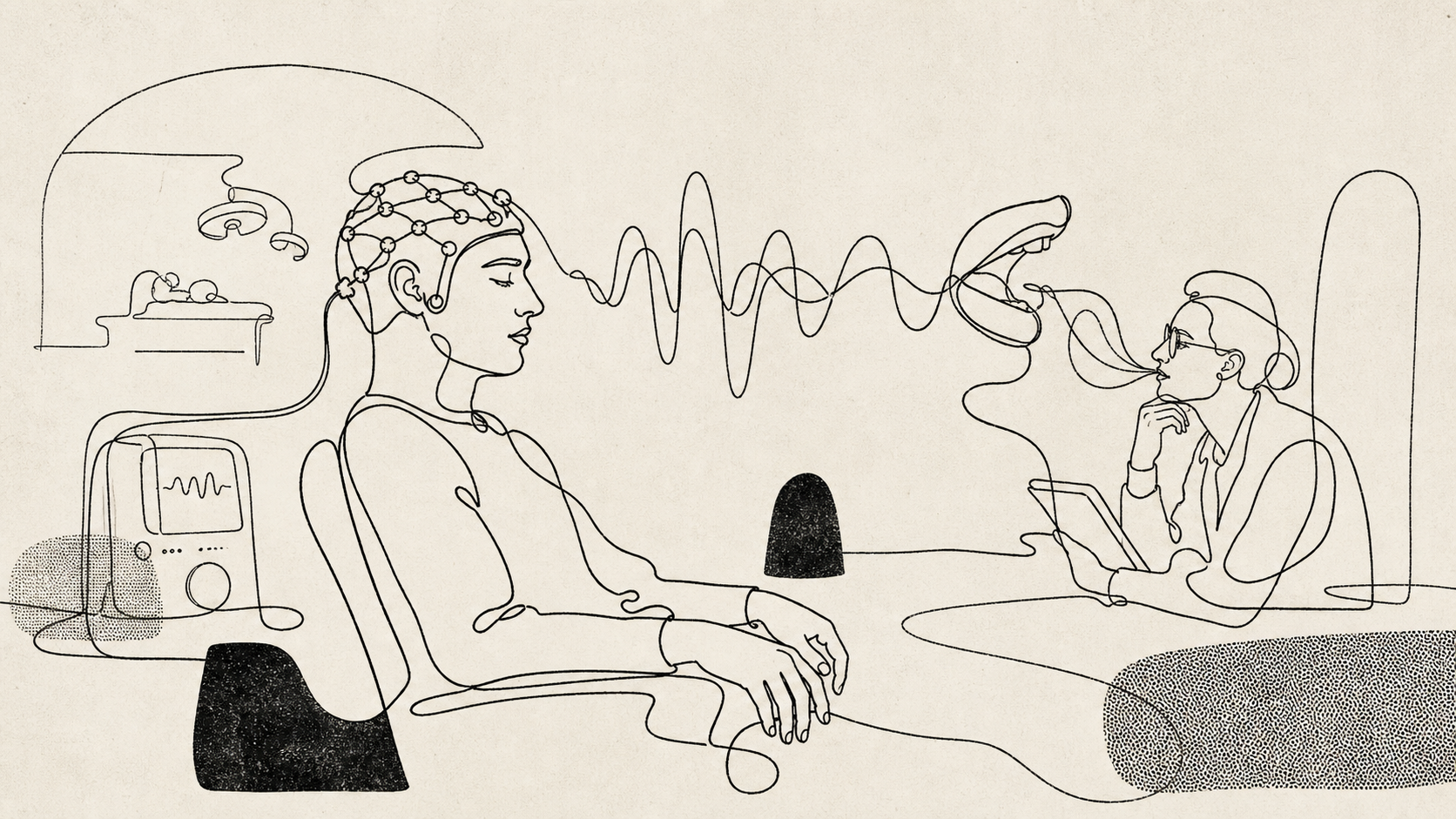
To achieve this breakthrough, the team trained Brain2Qwerty v2 on a substantial dataset: approximately 22,000 sentences collected from nine volunteer participants. The data was gathered through Magnetoencephalography (MEG) recordings, a non-invasive method, while the participants were actively engaged in the act of typing. The use of MEG is critical because it measures the magnetic fields produced by electrical currents in the brain, offering a detailed view of neural activity without penetrating the scalp. The fact that the system was trained on active typing data ensures that the recorded brain signals are directly correlated with the intended linguistic output, making the decoding task highly relevant and challenging.
Crucially, the researchers did not rely on older, segmented methods. By using end-to-end deep learning, the model processes the entire sequence of raw brain signals simultaneously. This holistic processing capability allows the model to maintain coherence and context across multiple words and sentences, which is vital for generating natural-sounding, meaningful communication. Furthermore, the integration of Large Language Models (LLMs) into the fine-tuning process is key; it allows the system to understand not just the presence of a signal, but the meaning and grammar of the intended message, significantly improving the quality of the decoded output.
In terms of performance, the results are highly encouraging. Brain2Qwerty v2 achieved a word accuracy rate of 61% across the dataset. This represents a dramatic improvement compared to the 8% word accuracy typically reported by other non-invasive decoding methods. Even more impressive is the performance observed in the best participant, where a word accuracy of 78% was achieved, meaning that over half of all decoded sentences contained one word error or less. This level of performance suggests a high degree of naturalness and reliability, making the technology clinically viable for future applications.
Beyond the immediate performance metrics, the study provides critical insights into the scalability of the technology. The finding that decoding accuracy improves log-linearly with data volume is a major takeaway. It suggests that the remaining performance gap between non-invasive methods and surgically implanted neuroprosthetics (like those using electrocorticography or stereotactic electroencephalography) might not be insurmountable, but rather a matter of sufficient data scaling. This realization shifts the focus from purely technological breakthroughs to the systematic collection and processing of massive, high-quality neural datasets.
Furthermore, the research emphasizes an open-science approach. The team is releasing the full training code for both Brain2Qwerty v1 and v2, alongside the v1 dataset from their partner, the Basque Center on Cognition, Brain, and Language (BCBL). This commitment to open data and open models is designed to accelerate the entire field of neuroscience. By making the foundational tools and data publicly available, they invite global collaboration, allowing researchers worldwide to build upon this work and accelerate the identification, diagnosis, and treatment of neurological disorders in a collaborative, non-siloed manner. This aligns with their broader 'Digital Brain Project' and their efforts to build open foundational models of the brain, including models like Tribev2 for perception encoding and NeuralSet for large-scale brain data processing.
In summary, Brain2Qwerty v2 is not just an incremental improvement; it represents a methodological shift. By combining state-of-the-art deep learning, large-scale data collection, and an open-source philosophy, the research offers a tangible, non-invasive path toward restoring communication for millions of people, potentially democratizing access to advanced neuroprosthetic capabilities previously limited by surgical risk and complexity. The combination of high accuracy (61% word accuracy) and the open-source release of code and data makes this a pivotal moment for neurotechnology.
Why it matters
- —It offers a non-surgical alternative to current, invasive neuroprosthetics, significantly expanding accessibility.
- —The high accuracy (61% word accuracy) dramatically improves the state-of-the-art for non-invasive BCIs.
- —The open-source release of code and data accelerates global neuroscience research.
Key facts
- Brain2Qwerty v2 uses end-to-end deep learning on raw MEG signals.
- It achieved a 61% word accuracy rate, a major leap from previous non-invasive methods (8%).
- The system was trained on 22,000 sentences from nine MEG recordings.
- The research emphasizes open science by releasing code and datasets.
- Accuracy improves log-linearly with data volume, suggesting data scaling is key.
The full text is in the original source. Here we provide a brief summary and key facts.