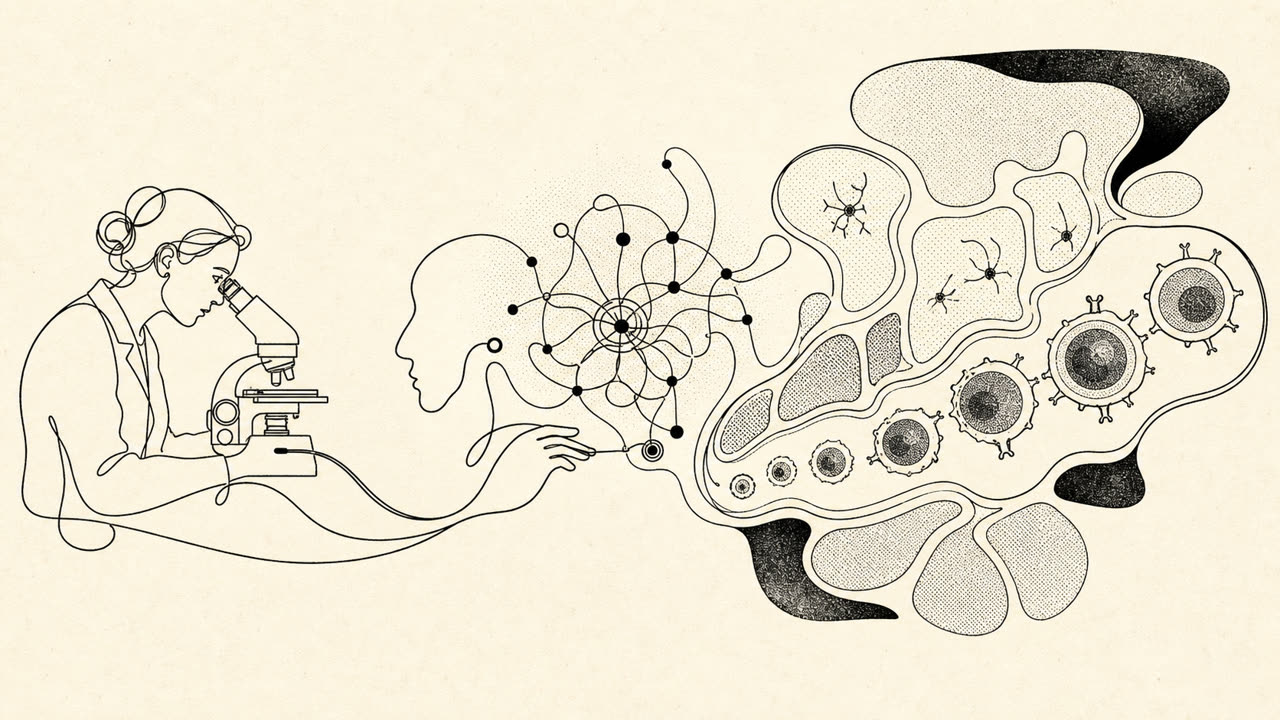
AI GPT-Rosalind Discovers Mechanism for Neuron Protection Using Cholesterol

Researchers used the advanced artificial intelligence system GPT-Rosalind to study the mechanisms of neurodegeneration using mouse brains as an example. The system revealed a potential link between impaired cholesterol transport and neuron degeneration, which could become a new direction for drug development.
GPT-Rosalind hypothesized that the problem might not lie with cholesterol itself, but with its delivery: perhaps it does not reach the areas of the neurons where it is needed. This gives scientists a specific, verifiable mechanism to combat disorders such as Perri syndrome.
Thanks to collaboration with PerturbAI and Scripps Research, the team was able to analyze gene expression data from millions of brain cells and correlate it with a vast volume of scientific literature in a record 32 minutes. The speed and scale of data analysis using AI significantly accelerate the search for new drug targets.
Why it matters
- —Discovery of a potential mechanism (cholesterol transport disruption) for treating neurodegenerative disorders.
- —Demonstration of incredible AI speed in biomedical research (analyzing millions of cells in 32 minutes).
- —Indication of new, specific drug targets, increasing the chances of success in medicine.
Key facts
- The GPT-Rosalind system analyzed gene expression data from millions of mouse brain cells.
- A potential mechanism for neuron protection was identified: restoration of cholesterol transport.
- The study concerns neurodegenerative disorders associated with the DCTN1 gene (Perry syndrome).
- AI analysis allowed linking genetic data with scientific literature in 32 minutes.
The full text is in the original source. Here we provide a brief summary and key facts.